

There is no shortage of books about money.
Walk into a bookstore or search online and you'll find thousands of titles promising to teach you how to budget, invest, get out of debt, buy real estate, retire early, or become wealthy.
Some are excellent.
Others are outdated, unnecessarily complicated, or built around strategies that aren't appropriate for most people.
So we decided to make the list smaller.
Books Worth Your Time
The Aureus Financial Reading List isn't intended to include every popular book ever written about money.
It's a curated collection of books we believe can genuinely help you become better at managing and understanding your financial life.
We've organized the list by subject so you can start with the area most relevant to you today.
Whether you're trying to get control of your finances, eliminate debt, make your first investment, build a portfolio, purchase rental property, prepare for retirement, increase your income, or start a business, you'll find recommendations designed to help you go deeper.
Start Where You Are
You don't need to read every book on this list.
In fact, we don't recommend trying.
Personal finance works best when you focus on the problems and opportunities that matter most to you right now.
If you're struggling with credit-card debt, a book about advanced portfolio construction probably isn't where you should begin.
If you're preparing to retire, a beginner's guide to budgeting may not be particularly useful.
And if you're just starting to invest, you probably don't need to begin with a 600-page book on security analysis.
Start with where you are. Learn what you need. Then keep moving forward.
How We've Organized the Library
Our recommendations are organized into the following areas:
- Personal Finance Fundamentals
- Budgeting & Cash Flow
- Saving & Financial Resilience
- Debt & Credit
- Stock Market Investing
- Portfolio Construction
- Behavioral Finance
- Real Estate Investing
- Retirement Planning
- Building Wealth & Financial Independence
- Increasing Income & Career Capital
- Entrepreneurship & Starting a Business
- Advanced Investing & Capital Allocation
Within each section, we'll explain why we recommend each book and who we think will benefit most from reading it.
Where available, each recommendation includes a cover image and a link to the book on Amazon. Recommendations are editorial. If Aureus participates in the Amazon Associates program in the future, those links may include an affiliate tag.
Some books are ideal for beginners. Others are intended for readers who already have a strong financial foundation and want to go considerably deeper.
Reading Is Only the Beginning
One final thought before we get to the books.
Reading about personal finance is useful.
Implementing what you learn is what changes your financial life.
You can read twenty books about investing and never invest a dollar.
You can understand everything about budgeting and still spend more than you earn.
You can know exactly how compound growth works and never give your money enough time to compound.
Financial knowledge matters, but knowledge becomes valuable when it changes behavior.
That's one of the central ideas behind the Aureus approach:
Learn the principles. Build the system. Follow the process.
You don't need to know everything about money.
You need to know enough to make sound decisions—and build financial systems that allow those decisions to keep working for you.
With that in mind, let's start with the foundation.
1. Personal Finance Fundamentals
Before worrying about which stocks to buy, how much you need for retirement, or whether real estate belongs in your portfolio, it helps to understand the fundamentals.
Good personal finance isn't built around finding the perfect investment or knowing every rule in the tax code. It's built around a relatively small number of principles: spend less than you earn, save consistently, use debt carefully, invest for the future, and create systems that make good financial decisions easier to repeat.
The books in this section provide a broad foundation for thinking about money and organizing your financial life.
I Will Teach You to Be Rich
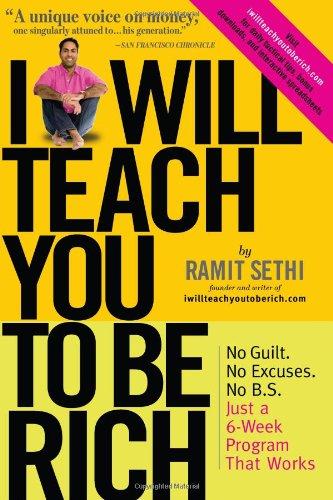
Ramit Sethi
Best for: Building a practical personal finance system
Experience level: Beginner
Despite the title, I Will Teach You to Be Rich isn't about getting rich quickly.
Ramit Sethi presents personal finance as a system that can be designed, automated, and largely allowed to run in the background. The book covers banking, credit cards, saving, investing, spending, and automation while emphasizing progress over financial perfection.
One of its strongest ideas is that managing money doesn't have to mean obsessing over every small purchase. Instead, Sethi encourages readers to focus on the financial decisions that matter most, automate good behaviors, and intentionally spend money on the things they value.
Why Aureus Recommends It
The systems-based philosophy is closely aligned with the way we think about personal finance at Aureus.
A good financial system shouldn't require you to make dozens of perfect decisions every day. Saving, investing, paying bills, and managing cash flow can increasingly become processes rather than recurring decisions.
This is an especially useful book for someone who understands that they should manage their money better but isn't sure how all the pieces fit together.
You'll learn about:
- Automating your finances
- Managing bank and credit accounts
- Building savings habits
- Beginning to invest
- Conscious spending
- Creating a repeatable financial system
The Index Card
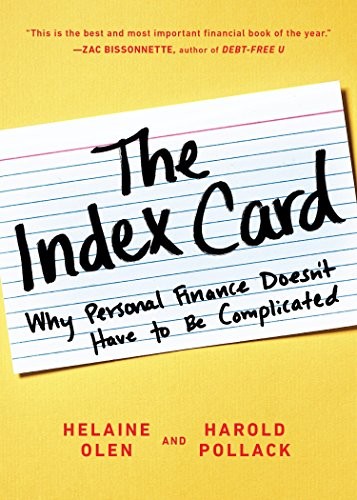
Helaine Olen & Harold Pollack
Best for: Understanding the essential rules of personal finance
Experience level: Beginner
Personal finance can seem incredibly complicated.
The Index Card makes the opposite argument: many of the principles necessary to build a healthy financial life are simple enough to fit on a single index card.
The book strips away much of the noise surrounding money and focuses on fundamentals such as saving, avoiding unnecessary fees, using debt carefully, investing simply, and protecting yourself against financial risks.
Why Aureus Recommends It
One of the biggest obstacles to improving your finances is believing you need to become a financial expert before you can make good decisions.
You don't.
Understanding a handful of sound principles—and following them consistently—can take you remarkably far.
The Index Card is a useful reminder that complexity isn't the same thing as sophistication.
You'll learn about:
- Saving consistently
- Managing debt
- Keeping investment costs low
- Diversification
- Insurance and financial protection
- Avoiding unnecessary financial complexity
The One-Page Financial Plan
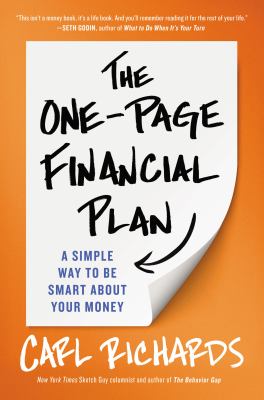
Carl Richards
Best for: Connecting your money to what you actually want from life
Experience level: Beginner to Intermediate
Financial planning often begins with numbers.
Carl Richards begins somewhere else:
Why is money important to you?
The One-Page Financial Plan explores how financial decisions connect to larger goals and encourages readers to build a plan that is simple enough to understand and flexible enough to change as life changes.
Rather than attempting to predict everything that will happen decades into the future, Richards emphasizes identifying what's important, understanding where you are today, and making reasonable decisions about what to do next.
Why Aureus Recommends It
A financial plan isn't valuable simply because it's mathematically sophisticated.
It's valuable because it helps you make better decisions.
We particularly like the book's emphasis on direction over precision. Your income will change. Markets will change. Your family may change. Your priorities may change.
A useful financial system needs to adapt with you.
You'll learn about:
- Identifying meaningful financial goals
- Understanding your current financial position
- Connecting money with personal priorities
- Creating a simple financial plan
- Making decisions under uncertainty
- Updating your plan as your life changes
Where Should You Start?
If you're completely new to personal finance, we'd start with I Will Teach You to Be Rich. It's the most comprehensive practical introduction of the three and provides a useful framework for putting the fundamentals into action.
If financial advice tends to feel overwhelming, start with The Index Card.
And if you already understand the mechanics of personal finance but want to think more carefully about what you're trying to accomplish with your money, choose The One-Page Financial Plan.
You don't need to read all three before moving forward.
Choose the book that best matches where you are today.
2. Budgeting & Cash Flow
A budget isn't supposed to make you feel guilty about spending money.
It's supposed to help you decide where your money should go before it disappears.
At its core, managing cash flow means understanding the relationship between what you earn, what you spend, and what you keep. When that relationship is working, saving and investing become much easier. When it isn't, even a high income can leave you feeling like you're constantly falling behind.
The books in this section approach budgeting from different perspectives, but they share an important idea: the goal isn't simply to spend less. It's to use your money intentionally.
Your Money or Your Life
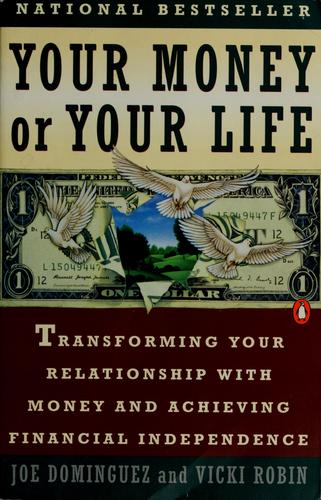
Vicki Robin & Joe Dominguez
Best for: Rethinking your relationship with spending
Experience level: Beginner to Intermediate
Every purchase costs more than the number printed on the receipt.
It also represents some portion of the time and effort you spent earning the money used to pay for it.
That idea sits at the heart of Your Money or Your Life. The book encourages readers to examine the relationship between money, work, consumption, and the life they ultimately want to build.
Rather than treating budgeting simply as an exercise in restricting spending, it asks a more important question:
Is the way you're spending your money actually improving your life?
That shift in perspective can be powerful, particularly for someone who earns a reasonable income but still feels like money continually disappears.
Why Aureus Recommends It
Tracking expenses is useful.
Understanding why you're spending the money is even more useful.
Your Money or Your Life encourages a level of intentionality that fits well with the Aureus approach to cash flow. The objective isn't to eliminate everything enjoyable from your budget. It's to distinguish between spending that genuinely adds value to your life and spending that happens largely out of habit.
You'll learn about:
- Understanding where your money goes
- Thinking differently about the true cost of purchases
- Evaluating whether spending reflects your priorities
- Reducing unnecessary consumption
- Increasing your savings rate
- Connecting financial decisions with long-term independence
All Your Worth
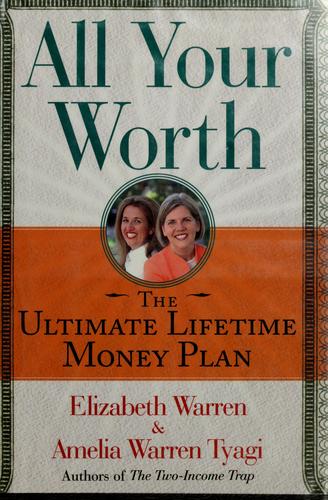
Elizabeth Warren & Amelia Warren Tyagi
Best for: Building a simple and sustainable budget
Experience level: Beginner
Some budgeting systems require you to track dozens of categories and account for virtually every dollar you spend.
All Your Worth takes a broader approach.
The book popularized a framework that divides money into three major categories:
- Needs
- Wants
- Savings
Rather than attempting to create a perfect budget, the objective is to keep these major areas of your financial life in reasonable balance.
That makes the framework particularly useful for people who have tried highly detailed budgets before and found them difficult to maintain.
Why Aureus Recommends It
A budget only works if you can actually follow it.
Complexity can create the illusion of control while making a financial system harder to maintain. A simpler framework can help you recognize the big problems first.
If housing, transportation, debt payments, and other fixed obligations consume most of your income, eliminating a few small discretionary purchases probably won't solve the underlying cash-flow problem.
Looking at the major components of your spending can help you identify where meaningful changes are actually possible.
You'll learn about:
- Separating needs from wants
- Balancing spending and saving
- Identifying oversized fixed expenses
- Creating a sustainable spending framework
- Avoiding overly restrictive budgets
- Looking at your finances from a big-picture perspective
The Automatic Millionaire
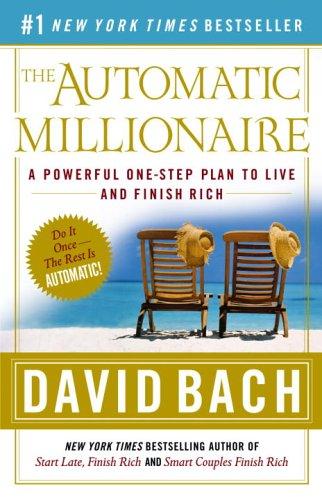
Knowing what you should do with money is one thing.
Remembering to do it every month for the next thirty years is another.
The Automatic Millionaire is built around a simple idea: instead of depending on motivation and willpower, design your financial life so that important actions happen automatically.
Savings can be transferred automatically.
Investments can be made automatically.
Bills can be paid automatically.
Over time, these recurring processes can turn good financial intentions into consistent financial behavior.
Why Aureus Recommends It
This is one of the principles we emphasize most strongly at Aureus:
Whenever possible, turn good financial decisions into systems.
If saving requires you to remember to transfer money every payday, there will always be another reason to postpone it.
If the transfer happens automatically, saving becomes the default.
Automation doesn't eliminate the need to review your finances or adjust your plan. It simply reduces the number of routine decisions you have to make along the way.
You'll learn about:
- Automating savings
- Automating investing
- Building consistent financial habits
- Reducing dependence on willpower
- Paying yourself first
- Using systems to support long-term financial goals
Where Should You Start?
If you feel like you earn money but aren't sure where it goes, we'd start with Your Money or Your Life. It can fundamentally change the way you think about spending.
If traditional budgeting has always felt too complicated or restrictive, All Your Worth provides a simpler framework for organizing your cash flow.
And if you already know what you should be doing but struggle to do it consistently, The Automatic Millionaire is the natural choice.
The objective isn't to create the world's most detailed budget.
It's to build a cash-flow system you can actually live with—and continue following for years.
3. Saving & Financial Resilience
Saving money isn't just about accumulating a larger balance.
It's about creating financial resilience.
Without savings, even a relatively small unexpected expense can disrupt your finances. A car repair, medical bill, temporary loss of income, or major home expense can quickly become credit-card debt when there isn't cash available to absorb it.
Savings create distance between an unexpected event and a financial crisis.
The books in this section approach financial stability from different perspectives, but both reinforce an important principle: building wealth starts with consistently keeping some of what you earn.
Get Good with Money
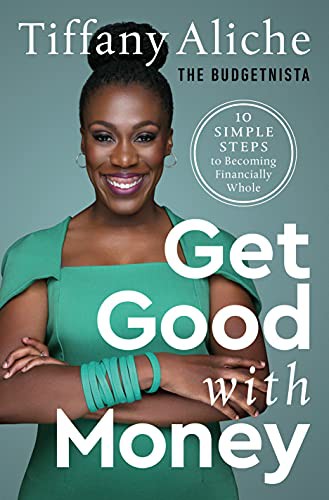
Tiffany Aliche
Best for: Building financial stability from the ground up
Experience level: Beginner
Financial health involves much more than simply having money in a savings account.
In Get Good with Money, Tiffany Aliche presents a broad framework for strengthening the different areas of your financial life, including budgeting, saving, debt, credit, insurance, investing, and net worth.
Rather than focusing on a single financial problem, the book encourages readers to gradually build a stronger overall financial foundation.
That makes it particularly useful for someone who knows their finances need improvement but isn't sure where to begin.
Why Aureus Recommends It
Financial problems rarely exist in isolation.
A lack of savings can lead to credit-card debt. High debt payments can make saving difficult. Poor cash flow can prevent someone from investing. Insufficient insurance can turn an unexpected event into a major financial setback.
A strong financial system addresses these areas together.
We particularly like Get Good with Money because it encourages readers to evaluate their financial lives broadly and improve them one component at a time.
You'll learn about:
- Building emergency savings
- Creating a workable budget
- Managing debt
- Understanding credit
- Protecting yourself with appropriate insurance
- Beginning to invest
- Tracking and building net worth
- Strengthening your overall financial foundation
The Richest Man in Babylon
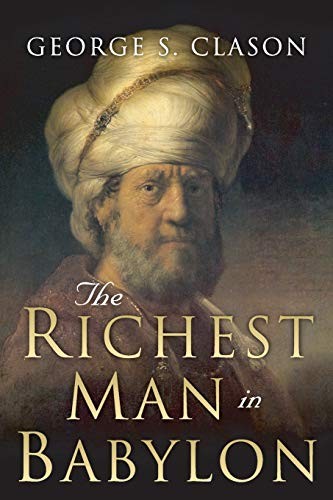
George S. Clason
Best for: Learning timeless principles of saving and wealth building
Experience level: Beginner
First published nearly a century ago, The Richest Man in Babylon teaches financial principles through a collection of short stories set in ancient Babylon.
The language and setting may be old-fashioned, but the central lessons are remarkably durable.
Perhaps the most famous is also one of the simplest:
Keep part of everything you earn.
That principle sounds obvious.
Following it consistently over an entire lifetime is much harder.
The book explores saving, controlling expenses, investing carefully, avoiding unnecessary losses, and gradually putting accumulated capital to work.
Why Aureus Recommends It
Modern financial products have changed enormously.
Human behavior hasn't.
It's easy to allow spending to expand alongside income. A raise becomes a nicer car. A bonus becomes a vacation. A larger paycheck gradually becomes a more expensive lifestyle.
If every dollar of additional income eventually becomes additional spending, building wealth becomes extremely difficult regardless of how much you earn.
The Richest Man in Babylon reinforces the habit that must exist before almost every other wealth-building strategy can work:
Consistently keep some of what you earn.
Once that habit exists, the money can begin serving other purposes—building an emergency fund, eliminating expensive debt, investing, and eventually creating long-term wealth.
You'll learn about:
- Paying yourself first
- Saving consistently
- Controlling lifestyle expenses
- Protecting accumulated savings
- Putting money to productive use
- Building wealth gradually over time
Where Should You Start?
If you're trying to build a complete financial foundation and want a modern, step-by-step framework, start with Get Good with Money.
If you're more interested in the fundamental habits behind saving and wealth accumulation, choose The Richest Man in Babylon.
The two books are very different, but they ultimately reinforce the same idea:
Financial resilience begins when there is consistently something left over.
Your first savings milestone doesn't need to be enormous.
Start by creating the habit. Build a cushion. Strengthen your emergency reserves. Then allow that foundation to support everything that comes next.
4. Debt & Credit
Debt is a financial tool.
Used carefully, it can help you purchase a home, finance an education, or acquire an asset that would otherwise be difficult to afford.
Used poorly, it can become one of the biggest obstacles to building wealth.
High-interest consumer debt is particularly damaging because interest works against you. Instead of your money compounding for your future, a growing portion of your income goes toward paying for decisions you made in the past.
Credit matters too. Your credit history can affect the cost of borrowing and your ability to qualify for certain financial products.
The books in this section can help you understand debt, develop a strategy for eliminating problematic balances, and better understand the credit system.
The Total Money Makeover
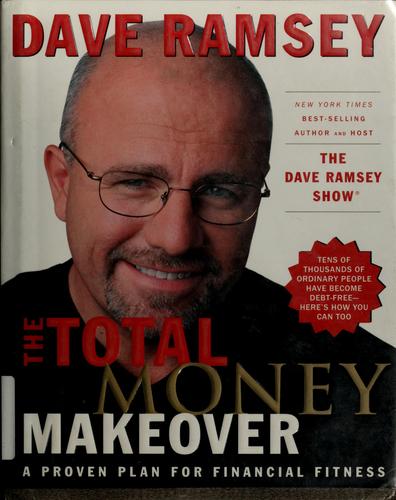
Dave Ramsey
Best for: Getting serious about eliminating consumer debt
Experience level: Beginner
When debt has become a major financial problem, knowing the mathematics isn't always enough.
Sometimes the bigger challenge is behavior.
The Total Money Makeover takes an aggressive approach to getting control of your finances, with a particular emphasis on eliminating consumer debt and changing the habits that created it.
At the center of Ramsey's approach is the debt snowball, which prioritizes paying off debts from the smallest balance to the largest while maintaining minimum payments on the others.
Mathematically, paying the highest-interest debt first can minimize total interest expense. Ramsey instead emphasizes the psychological benefit of eliminating individual debts quickly and using those early victories to build momentum.
Why Aureus Recommends It
We don't agree with every financial recommendation in The Total Money Makeover, and readers shouldn't interpret its inclusion here as an endorsement of every aspect of Ramsey's broader financial philosophy.
But when it comes to the behavioral side of escaping consumer debt, the book offers valuable lessons.
Debt repayment isn't simply a spreadsheet problem.
A mathematically optimal strategy isn't very useful if someone abandons it after three months. For people who have repeatedly struggled to eliminate debt, motivation, momentum, and behavioral change can matter enormously.
You'll learn about:
- Building a debt-payoff plan
- The debt snowball method
- Changing behaviors surrounding debt
- Creating momentum through small victories
- Avoiding new consumer debt
- Building financial discipline
The Debt Escape Plan
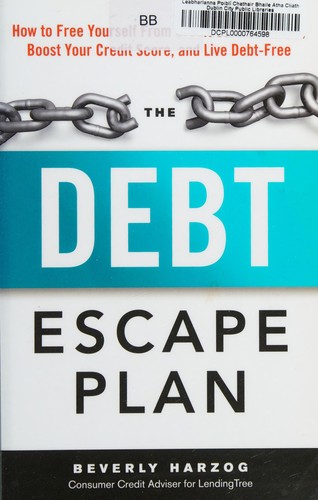
Beverly Harzog
Best for: Developing a practical plan for eliminating credit-card debt
Experience level: Beginner
Credit-card debt can be particularly difficult to escape.
Interest rates are often high, minimum payments can stretch repayment over long periods, and continuing to use the cards while trying to pay them down can make progress frustratingly slow.
In The Debt Escape Plan, Beverly Harzog focuses specifically on helping readers understand their debt and create a realistic strategy for eliminating it.
The book combines practical repayment strategies with the behavioral changes necessary to prevent debt from returning.
Why Aureus Recommends It
Debt becomes easier to confront when it stops being an abstract source of stress and becomes a problem with measurable components:
Balance. Interest rate. Payment. Timeline.
Once those numbers are understood, you can begin building a deliberate repayment strategy.
We particularly like the book's focus on credit-card debt because revolving high-interest debt is one of the areas where taking action can have an immediate impact on someone's financial health.
You'll learn about:
- Understanding credit-card debt
- Creating a debt-payoff strategy
- Prioritizing balances
- Reducing interest costs
- Changing spending behavior
- Preventing future debt problems
Your Score
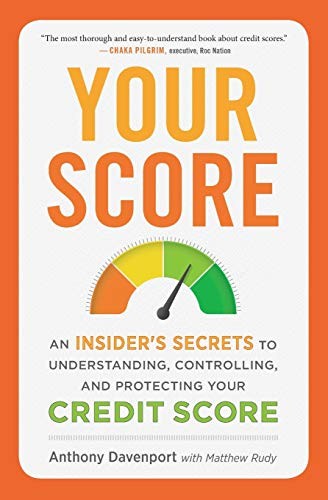
Anthony Davenport
Best for: Understanding credit scores and how credit decisions affect them
Experience level: Beginner
Your credit score isn't a measure of your wealth.
It isn't a measure of your income.
And it isn't a measure of your worth as a person.
It's a tool lenders use to help evaluate credit risk.
Yet that number can influence the financial terms you're offered when borrowing money, making it worthwhile to understand how the system works.
Your Score focuses on credit reports, credit scoring, borrowing behavior, and the steps consumers can take to better manage their credit profiles.
Why Aureus Recommends It
Credit scores are often surrounded by misconceptions.
People sometimes make unnecessary financial decisions because they believe they need to "build credit," worry that checking their own credit will damage their score, or misunderstand how balances and payment history affect their credit profile.
Understanding the system makes it easier to separate useful credit-management practices from myths.
The objective shouldn't be to obsess over achieving a perfect score.
It's to develop sound credit habits so that your credit profile becomes the result of responsible financial behavior.
You'll learn about:
- How credit scores work
- What's contained in a credit report
- Factors that can influence your score
- Credit-card utilization
- Payment history
- Managing credit responsibly
- Identifying and addressing credit-report problems
Where Should You Start?
If consumer debt has become a major obstacle and you need a framework that emphasizes action and behavioral change, start with The Total Money Makeover.
If credit-card debt is your primary concern and you want a more targeted repayment resource, choose The Debt Escape Plan.
If your debt is manageable but you want to better understand credit reports, credit scores, and how borrowing behavior affects them, start with Your Score.
Debt doesn't have to disappear overnight.
What matters is that the direction changes.
Stop adding expensive debt. Understand what you owe. Build a repayment strategy. Make consistent progress.
Eventually, money that once went toward interest payments can begin working toward your future instead.
5. Stock Market Investing
Investing in the stock market can seem intimidating.
There are thousands of stocks, mutual funds, and ETFs to choose from. Financial news constantly discusses which companies are rising, which markets are falling, and what investors should supposedly do next.
It's easy to assume that successful investing requires predicting what will happen.
For most investors, it doesn't.
A sound long-term investment strategy can be remarkably simple: diversify broadly, keep costs low, invest consistently, and give your money time to compound.
The books in this section explain both how that approach works and why it can be so difficult to beat consistently.
The Little Book of Common Sense Investing
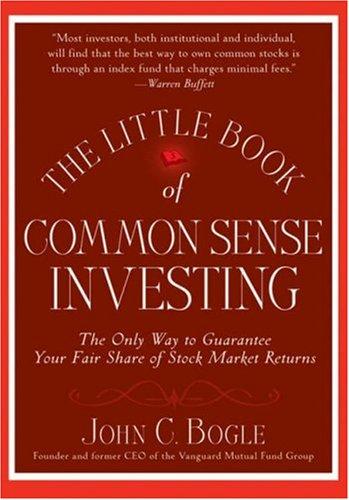
John C. Bogle
Best for: Learning the case for low-cost index investing
Experience level: Beginner
John Bogle founded Vanguard and played a major role in bringing low-cost index investing to individual investors.
In The Little Book of Common Sense Investing, Bogle makes a straightforward argument: investors collectively own the market, and before costs, their collective return must therefore equal the market's return.
After costs, investors as a group must earn less.
That makes expenses, trading costs, taxes, and other investment frictions enormously important over long periods of time.
Rather than continually trying to identify tomorrow's winning stocks or fund managers, Bogle argues that most investors are better served by owning a broadly diversified portfolio at very low cost.
Why Aureus Recommends It
This book explains several principles at the heart of the Aureus approach to long-term investing:
Diversification matters. Costs matter. Time matters.
Investing doesn't need to involve continually predicting markets or finding the next great company.
For many investors, a portfolio of diversified, low-cost funds can provide exposure to thousands of businesses while requiring remarkably little ongoing maintenance.
The strategy is simple.
Following it through decades of market cycles is the harder part.
You'll learn about:
- Index funds
- Diversification
- Investment expenses
- Expense ratios
- Active versus passive management
- Long-term compounding
- Why investment costs matter
- Staying invested
A Random Walk Down Wall Street
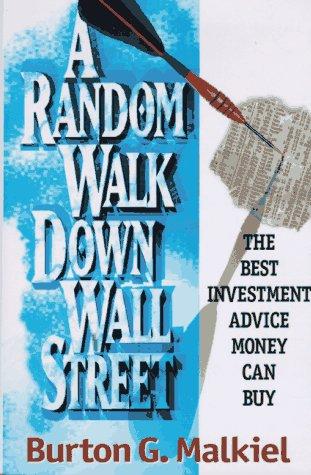
Burton G. Malkiel
Best for: Understanding the evidence behind long-term diversified investing
Experience level: Beginner to Intermediate
Can investors consistently predict which stocks will outperform?
Can professional fund managers reliably beat the market?
Can charts tell us where prices are going next?
In A Random Walk Down Wall Street, Burton Malkiel examines many of the strategies investors have used in their attempts to outperform financial markets.
The book explores market history, bubbles, fundamental analysis, technical analysis, diversification, asset allocation, behavioral finance, and modern portfolio theory.
Its central message is not that markets are always perfectly priced.
It's that consistently identifying and exploiting mispricing is much harder than it appears.
Why Aureus Recommends It
Investors are constantly exposed to compelling stories.
A particular stock is supposedly the next great opportunity.
A market crash is supposedly imminent.
A fund manager has beaten the market for several years.
A new investment strategy supposedly changes everything.
Understanding the evidence behind investing can make those stories easier to evaluate.
A Random Walk Down Wall Street gives readers a deeper intellectual foundation for understanding why diversification, low costs, and long investment horizons can be so effective.
You'll learn about:
- Market efficiency
- Active versus passive investing
- Fundamental and technical analysis
- Market bubbles
- Diversification
- Asset allocation
- Investor behavior
- Long-term investment strategy
The Bogleheads' Guide to Investing
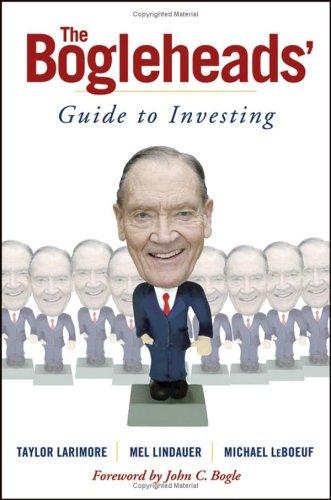
Taylor Larimore, Mel Lindauer & Michael LeBoeuf
Best for: Building and maintaining a practical long-term investment portfolio
Experience level: Beginner
Understanding investment theory is useful.
Eventually, however, you need to actually build a portfolio.
The Bogleheads' Guide to Investing translates many of John Bogle's investment principles into a practical framework individual investors can implement themselves.
The book covers far more than simply choosing index funds. It addresses saving, asset allocation, diversification, retirement accounts, taxes, investment costs, portfolio maintenance, and investor behavior.
Why Aureus Recommends It
This is one of the most practical investing books on our list.
A successful investment strategy needs to answer questions such as:
- What should I own?
- How diversified should I be?
- Which accounts should I use?
- How much risk should I take?
- When should I rebalance?
- What should I do when markets fall?
The Bogleheads philosophy provides straightforward answers without requiring investing to become a second career.
That makes the book particularly useful for someone who understands the basic case for index investing and is ready to turn those principles into an actual portfolio.
You'll learn about:
- Index investing
- Asset allocation
- Diversification
- Retirement accounts
- Investment costs
- Tax considerations
- Rebalancing
- Maintaining investment discipline
The Elements of Investing
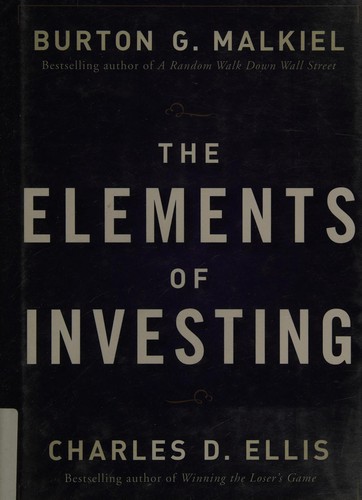
Burton G. Malkiel & Charles D. Ellis
Best for: Someone who wants the essentials of investing without unnecessary complexity
Experience level: Beginner
You don't need to read hundreds of pages before you can understand the principles behind sensible investing.
The Elements of Investing distills decades of investment research and experience into a short, accessible guide.
Malkiel and Ellis focus on a handful of ideas that have enormous consequences over an investing lifetime: save consistently, start early, diversify broadly, minimize costs, understand taxes, and avoid allowing emotions to derail your strategy.
It's one of the shortest books on this list.
That's part of what makes it valuable.
Why Aureus Recommends It
Investing has an unusual problem:
It's possible to learn so much that you begin making things unnecessarily complicated.
More funds don't necessarily create a better portfolio.
More trading doesn't necessarily produce better returns.
More financial information doesn't necessarily produce better decisions.
The Elements of Investing strips investing back to the principles that matter most.
For someone who wants to understand the fundamentals before going deeper, this may be the best starting point in this entire section.
You'll learn about:
- Starting early
- Saving consistently
- Diversification
- Low-cost investing
- Index funds
- Taxes and investment returns
- Avoiding common investor mistakes
- Maintaining a long-term perspective
Where Should You Start?
If you've never invested before and want the shortest introduction to the essential principles, start with The Elements of Investing.
If you want to understand the case for index investing in greater depth, read The Little Book of Common Sense Investing.
If you want to understand more of the academic and historical evidence behind these ideas, choose A Random Walk Down Wall Street.
And if you're ready to translate those principles into a complete investment strategy, The Bogleheads' Guide to Investing is an excellent next step.
You don't need to become an expert at predicting markets to become a successful investor.
For most people, the more important challenge is building a sensible strategy—and having the discipline to follow it for a very long time.
6. Portfolio Construction
Choosing investments is only part of investing.
You also need to decide how those investments fit together.
How much of your portfolio should be invested in stocks?
Should you own bonds?
How much international exposure makes sense?
How do you balance the desire for higher returns with your ability to tolerate losses?
These questions are part of portfolio construction.
A well-designed portfolio isn't simply a collection of good investments. It's a group of investments deliberately combined to pursue a particular objective while managing risk.
The books in this section go beyond the basics of investing and explore asset allocation, diversification, risk, and the process of building a portfolio you can actually maintain.
The Four Pillars of Investing
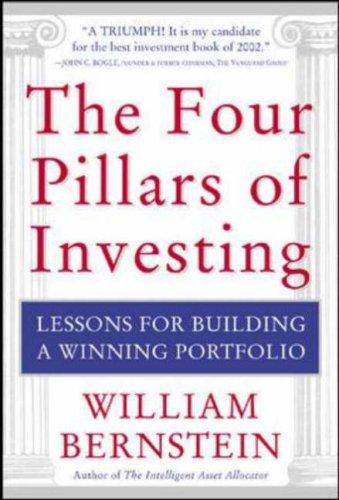
William J. Bernstein
Best for: Developing a deeper understanding of how successful portfolios are built
Experience level: Intermediate
Investing isn't just about understanding stocks and bonds.
William Bernstein argues that successful investors need knowledge in four major areas:
- Investment theory
- Investment history
- Investor psychology
- The investment industry
Together, these form the "four pillars" of investing.
The book explores concepts such as risk and return, diversification, market history, investor behavior, and the conflicts that can exist within the financial-services industry.
Rather than providing a list of investments to buy, Bernstein helps readers develop a framework for thinking about investing itself.
Why Aureus Recommends It
It's relatively easy to build a portfolio when markets are calm.
The real test comes when that portfolio behaves differently than you expected.
Stocks fall.
Bonds struggle.
One asset class dramatically outperforms another.
Financial headlines make you question your strategy.
Understanding why your portfolio was constructed the way it was can make it easier to maintain discipline when those periods arrive.
The Four Pillars of Investing provides the intellectual foundation behind many of the principles we emphasize at Aureus: diversification, appropriate risk, reasonable expectations, low costs, and long-term discipline.
You'll learn about:
- Risk and expected return
- Diversification
- Asset allocation
- Market history
- Investor psychology
- Investment costs
- The financial-services industry
- Building a long-term investment strategy
The Intelligent Asset Allocator
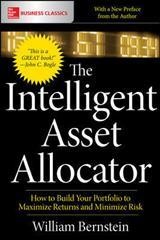
William J. Bernstein
Best for: Understanding the mechanics of asset allocation and diversification
Experience level: Intermediate to Advanced
Diversification is often summarized as:
Don't put all your eggs in one basket.
That's true, but it doesn't explain why diversification works—or how different investments should actually be combined.
The Intelligent Asset Allocator goes much deeper.
Bernstein explores the relationship between risk and return, the behavior of different asset classes, correlations between investments, and the mathematics behind portfolio diversification.
The book is more technical than The Four Pillars of Investing, making it particularly useful for readers who want to understand the mechanics behind portfolio construction rather than simply following a model allocation.
Why Aureus Recommends It
A portfolio isn't diversified simply because it owns many investments.
If those investments respond similarly to the same economic conditions, adding more of them may provide much less diversification than it appears.
What matters is how the different components of a portfolio behave in relation to one another.
Understanding those relationships can help investors build portfolios designed around the total risk of the portfolio rather than evaluating every investment independently.
This is an excellent book for readers who have mastered investing fundamentals and want to understand the theory behind asset allocation.
You'll learn about:
- Risk and return
- Asset-class behavior
- Correlation
- Portfolio volatility
- Diversification
- Efficient portfolios
- Rebalancing
- Designing an asset allocation
All About Asset Allocation
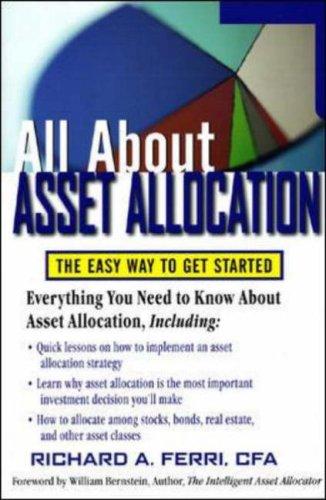
Richard A. Ferri
Best for: Turning asset-allocation principles into a practical portfolio
Experience level: Intermediate
Understanding that diversification matters is one thing.
Deciding what percentage of your portfolio should actually be allocated to different investments is another.
All About Asset Allocation focuses on the practical side of building diversified portfolios across different asset classes.
Richard Ferri examines stocks, bonds, real estate, international investments, and other portfolio components while explaining how they can be combined according to an investor's objectives and tolerance for risk.
The book bridges the gap between investment theory and implementation.
Why Aureus Recommends It
One of the most common mistakes investors make is focusing primarily on which investment to buy next.
A better question is often:
What role would this investment play in my portfolio?
Every investment should have a purpose.
Stocks may provide long-term growth.
Bonds may help moderate portfolio volatility and provide income.
International investments can expand diversification beyond a single country.
Different asset classes behave differently under different economic conditions.
Thinking in terms of allocation shifts attention away from collecting investments and toward designing a portfolio.
You'll learn about:
- Major asset classes
- Stock and bond allocations
- International diversification
- Real estate within a portfolio
- Risk tolerance
- Portfolio construction
- Rebalancing
- Adjusting allocation over time
Where Should You Start?
If you understand basic investing but want to develop a much stronger overall investment framework, start with The Four Pillars of Investing.
If you're comfortable with investment concepts and want to understand the theory and mathematics behind diversification, move on to The Intelligent Asset Allocator.
If your primary goal is translating asset-allocation concepts into an actual portfolio, choose All About Asset Allocation.
These books also reinforce an important distinction:
Choosing investments and building a portfolio are not the same thing.
A portfolio shouldn't be a collection of whatever investments happened to look attractive when you bought them.
Each component should have a role.
And when those components are combined thoughtfully, the portfolio itself becomes the investment strategy.
7. Behavioral Finance
Knowing what to do with money and actually doing it are two very different things.
Investors know they shouldn't panic when markets fall.
People know they should save for the future.
We know that chasing performance, spending impulsively, and making financial decisions based on emotion can hurt us.
And yet we do these things anyway.
That's because personal finance isn't purely a mathematical problem.
It's a human behavior problem.
Fear, greed, overconfidence, impatience, social comparison, and our individual experiences with money can influence decisions just as much as spreadsheets and financial models.
The books in this section explore why we make the financial decisions we do—and how understanding our own behavior can help us make better ones.
The Psychology of Money
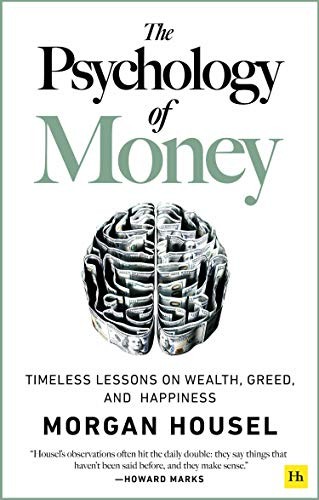
Morgan Housel
Best for: Understanding how behavior shapes financial outcomes
Experience level: Beginner to Intermediate
Two people can receive the same financial information and make completely different decisions.
Why?
Because our decisions about money aren't based solely on facts.
They're influenced by our experiences, upbringing, expectations, fears, ambitions, and personal definitions of success.
In The Psychology of Money, Morgan Housel uses a series of stories and observations to explore how people think about wealth, risk, saving, investing, luck, and financial independence.
Rather than teaching a specific investment strategy, the book focuses on something more fundamental:
How to think about money.
Why Aureus Recommends It
If we had to recommend one financial book to the widest possible audience, The Psychology of Money would be one of our strongest candidates.
Financial knowledge is important, but knowledge alone doesn't guarantee good outcomes.
An investor can understand diversification and still panic during a bear market.
Someone can understand compound growth and still continually postpone saving.
A household can earn a very high income and still accumulate very little wealth.
Housel helps explain why.
One of the book's most important lessons is that successful personal finance often depends less on extraordinary intelligence than on developing reasonable behaviors that you can maintain for a very long time.
You'll learn about:
- Financial behavior
- Wealth versus income
- Saving and financial flexibility
- Risk and uncertainty
- Compounding
- Reasonable financial expectations
- The role of luck
- Long-term thinking
The Behavior Gap
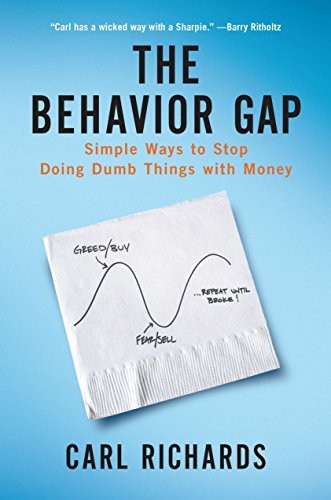
Carl Richards
Best for: Investors who struggle with emotional decision-making
Experience level: Beginner to Intermediate
An investment can perform well while the person who owns it performs poorly.
How?
By repeatedly buying and selling at the wrong times.
Carl Richards uses the term behavior gap to describe the difference that can emerge between investment returns and the returns investors actually experience because of their own decisions.
Markets rise and optimism grows.
Investors become excited and buy.
Markets fall and fear takes over.
They sell.
Then the cycle begins again.
The Behavior Gap explores how our attempts to respond to uncertainty can sometimes cause more damage than the uncertainty itself.
Why Aureus Recommends It
One of the hardest parts of investing is doing nothing.
A diversified portfolio may be functioning exactly as intended while financial headlines make it feel as though something needs to change immediately.
That creates a dangerous temptation:
Action feels like control.
But activity isn't necessarily progress.
Sometimes the most valuable decision an investor can make is simply allowing a well-designed financial system to continue working.
Richards does an excellent job of showing how emotion, prediction, and short-term thinking can interfere with otherwise sound financial plans.
You'll learn about:
- Emotional investing
- Buying high and selling low
- Market uncertainty
- Investor overreaction
- Financial decision-making
- Staying committed to a plan
- Separating planning from prediction
- Avoiding unnecessary financial activity
Misbehaving
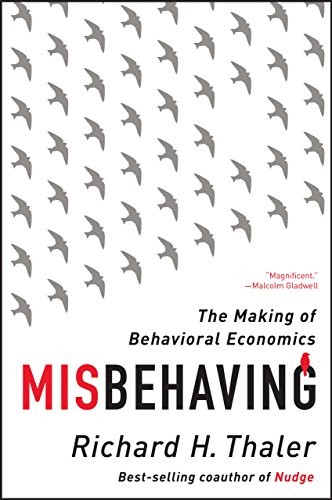
Richard H. Thaler
Best for: Understanding the science behind behavioral economics
Experience level: Intermediate
Traditional economic models often begin with a convenient assumption:
People behave rationally.
Real people are considerably more complicated.
We procrastinate.
We hate losses.
We value things differently simply because we own them.
We make different decisions depending on how choices are presented.
And we frequently behave in ways that traditional economic theory struggles to explain.
In Misbehaving, Nobel Prize-winning economist Richard Thaler tells the story of the development of behavioral economics and the research that challenged conventional assumptions about rational decision-making.
Why Aureus Recommends It
The Psychology of Money and The Behavior Gap show how behavior affects our personal financial lives.
Misbehaving goes deeper into why those behaviors exist.
Understanding concepts such as loss aversion, mental accounting, the endowment effect, and self-control problems can help explain financial behaviors that otherwise seem irrational.
Why does losing $1,000 often feel more significant than gaining $1,000?
Why might someone carry expensive credit-card debt while simultaneously maintaining savings?
Why do investors become reluctant to sell investments simply because they're trading below the price they paid?
Behavioral economics helps explain these decisions.
And once you understand that humans aren't perfectly rational financial decision-makers, an important principle follows:
Good financial systems should be designed for real people—not perfectly rational ones.
You'll learn about:
- Behavioral economics
- Loss aversion
- Mental accounting
- The endowment effect
- Self-control
- Decision-making biases
- How incentives influence behavior
- Why people don't always make economically rational choices
Where Should You Start?
For most readers, start with The Psychology of Money.
It's accessible, broadly applicable, and its lessons extend far beyond investing.
If your biggest challenge is reacting emotionally to markets or constantly changing your investment strategy, read The Behavior Gap.
And if you're fascinated by the psychology behind financial decisions and want to understand the academic foundations of behavioral economics, move on to Misbehaving.
There is an important lesson connecting all three books:
You are part of your financial system.
Your budget can be mathematically perfect.
Your investment portfolio can be beautifully diversified.
Your financial plan can account for every imaginable scenario.
But none of those things work if human behavior repeatedly overrides them.
Learning to manage money therefore requires learning something about yourself.
8. Real Estate Investing
Real estate can be a powerful way to build wealth.
But owning an investment property is very different from owning a stock or an index fund.
A rental property is both an investment and a business.
You have to evaluate purchase price, financing, rents, expenses, vacancies, repairs, taxes, insurance, and ultimately the return you expect to earn on the capital you've invested.
Leverage can amplify returns—but it can also amplify mistakes.
The books in this section approach real estate from several angles: building a portfolio, analyzing properties, acquiring homes gradually, using creative financing, and recycling capital through the BRRRR strategy.
Together, they provide a strong foundation for understanding real estate investing beyond the promise of "passive income."
The Millionaire Real Estate Investor
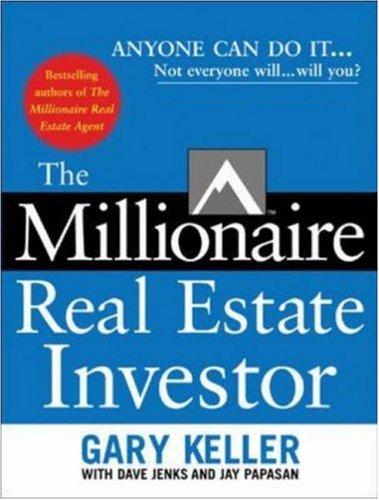
Gary Keller, Dave Jenks & Jay Papasan
Best for: Understanding the overall business of building a real estate portfolio
Experience level: Beginner to Intermediate
Buying a rental property is one thing.
Building a portfolio of properties is another.
The Millionaire Real Estate Investor looks at real estate investing as a long-term wealth-building process rather than a series of isolated property purchases.
The book explores how investors think about opportunities, evaluate deals, acquire properties, use financing, and gradually build a larger portfolio.
One of its strengths is its emphasis on approaching real estate systematically.
Instead of asking:
"Is this a good house?"
an investor learns to ask:
"Is this a good investment?"
Those aren't necessarily the same thing.
Why Aureus Recommends It
Successful real estate investing requires more than finding properties you like.
Every acquisition affects your cash flow, debt, liquidity, risk, and overall net worth.
We like The Millionaire Real Estate Investor because it encourages readers to think about real estate as a repeatable investment process rather than simply purchasing properties and hoping they appreciate.
You'll learn about:
- Developing an investment strategy
- Finding potential properties
- Evaluating real estate opportunities
- Financing acquisitions
- Building a rental portfolio
- Thinking like a real estate investor
- Managing risk
- Scaling over time
What Every Real Estate Investor Needs to Know About Cash Flow
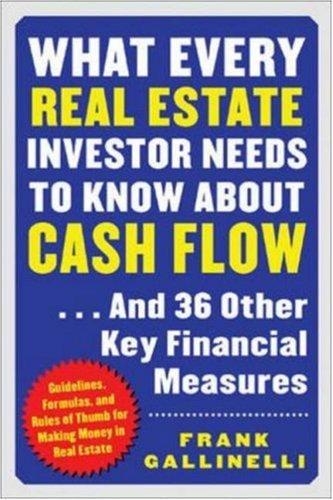
Frank Gallinelli
Best for: Learning how to analyze whether a real estate investment actually makes financial sense
Experience level: Intermediate
A property can look like a great investment and still produce disappointing returns.
Purchase price alone tells you very little.
You need to understand the income the property can generate, the expenses required to operate it, the financing used to acquire it, and the amount of capital you have invested.
Frank Gallinelli's What Every Real Estate Investor Needs to Know About Cash Flow focuses on the numbers behind real estate investing.
Rather than concentrating primarily on finding properties or negotiating deals, it teaches readers how to evaluate the economics of an investment.
Why Aureus Recommends It
This is one of our favorite real estate books because it emphasizes something that can easily get lost in the excitement of buying property:
The numbers have to work.
A property isn't automatically a good investment because it produces positive monthly cash flow.
Likewise, appreciation shouldn't be used to justify an investment whose economics make little sense today.
Understanding concepts such as net operating income, capitalization rates, cash-on-cash returns, and discounted cash flow gives investors a much stronger framework for comparing opportunities.
This is the book we'd recommend to someone who wants to move from looking at properties to analyzing investments.
You'll learn about:
- Net operating income
- Capitalization rates
- Cash-on-cash return
- Debt service
- Operating expenses
- Investment returns
- Discounted cash flow
- Evaluating competing properties
Building Wealth One House at a Time
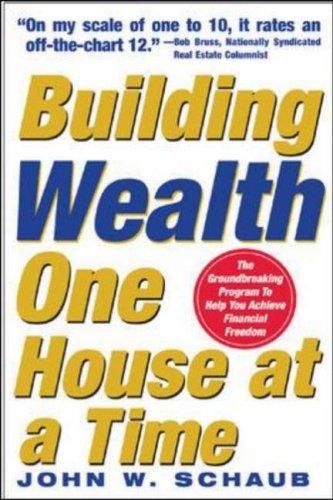
John Schaub
Best for: Building a residential real estate portfolio gradually
Experience level: Beginner to Intermediate
Real estate investing doesn't have to mean owning hundreds of properties.
Building Wealth One House at a Time presents a more deliberate approach centered largely around acquiring individual houses and gradually building wealth through ownership.
Rather than emphasizing rapid expansion, the philosophy is closer to what the title suggests:
One house at a time.
That makes it particularly relevant for someone interested in real estate but uncomfortable with the idea that success requires immediately taking on a large amount of leverage or building an enormous portfolio.
Why Aureus Recommends It
There's a tendency in real estate investing to equate more properties with more success.
That's not necessarily true.
Ten poorly financed properties can create substantially more risk than a few carefully selected ones.
What ultimately matters is the quality of the investments, the financing structure, the cash flow they produce, and how those properties fit within your broader financial position.
We like Schaub's more measured philosophy because it demonstrates that real estate wealth can be built incrementally.
You'll learn about:
- Single-family rental investing
- Finding attractive properties
- Financing real estate
- Managing rental properties
- Building equity
- Controlling investment risk
- Growing a portfolio gradually
- Thinking long term
The Book on Investing in Real Estate with No (and Low) Money Down
Brandon Turner
Best for: Understanding creative approaches to financing real estate
Experience level: Intermediate
One of the biggest barriers to buying investment property is capital.
Down payments, closing costs, repairs, and reserves can require substantial amounts of cash.
In The Book on Investing in Real Estate with No (and Low) Money Down, Brandon Turner explores alternative ways investors may structure acquisitions when they don't have enough cash to purchase properties using conventional methods alone.
The book discusses a variety of creative financing concepts and deal structures.
Why Aureus Recommends It
We recommend this book for understanding the possibilities, not because investors should automatically try to minimize the amount of their own money in every deal.
There is an important distinction.
Using less capital can increase returns on the money invested when things go well.
It can also increase leverage, financing complexity, liquidity risk, and potential losses when they don't.
That's why we think this book belongs after someone understands basic real estate economics.
Creative financing is a tool.
It isn't a substitute for buying a fundamentally sound investment.
You'll learn about:
- Creative financing
- Seller financing
- Partnerships
- Alternative deal structures
- Using leverage
- Financing constraints
- Structuring acquisitions
- Risks associated with highly leveraged investments
Buy, Rehab, Rent, Refinance, Repeat
David Greene
Best for: Understanding the BRRRR real estate investment strategy
Experience level: Intermediate
BRRRR stands for:
Buy → Rehab → Rent → Refinance → Repeat
The strategy attempts to solve one of the major constraints facing real estate investors: capital.
Instead of leaving all of the investor's original capital tied up in a property, the investor purchases and renovates the property, rents it, and then attempts to refinance based on its improved value.
If successful, some of the invested capital can be recovered and used toward another property.
David Greene's Buy, Rehab, Rent, Refinance, Repeat provides a detailed framework for understanding this approach.
Why Aureus Recommends It
BRRRR demonstrates how financing and capital allocation can dramatically affect real estate returns.
It also demonstrates why execution risk matters.
An investor must correctly estimate the purchase price, renovation costs, eventual rental income, operating expenses, post-renovation value, and available refinancing terms.
If one of those assumptions is substantially wrong, the investor may be unable to recover the expected capital.
That's why we'd view BRRRR as an intermediate strategy rather than a starting point for someone who hasn't yet learned how to analyze a rental property.
You'll learn about:
- The BRRRR process
- Finding potential properties
- Renovation economics
- Estimating rental income
- Refinancing
- Recycling investment capital
- Using leverage to scale
- Managing execution risk
Where Should You Start?
If you're new to real estate investing, we'd start with The Millionaire Real Estate Investor. It provides the broadest framework for understanding real estate as a long-term investment strategy.
Then read What Every Real Estate Investor Needs to Know About Cash Flow.
We consider that progression important.
Learn how real estate investing works. Then learn how to analyze the numbers.
If you're interested in building a smaller portfolio deliberately over time, move on to Building Wealth One House at a Time.
Once you understand property analysis, financing, and risk, the final two books explore more specialized strategies.
The Book on Investing in Real Estate with No (and Low) Money Down introduces creative financing techniques, while Buy, Rehab, Rent, Refinance, Repeat goes deeper into a specific strategy for acquiring, improving, financing, and scaling rental properties.
Real estate can build significant wealth.
But the objective isn't simply to own more property.
Buy assets whose economics you understand, finance them responsibly, maintain adequate reserves, and treat every property like the investment it is.
9. Retirement Planning
Retirement changes the financial problem.
During your working years, the primary challenge is accumulation: earn income, save consistently, invest, and allow time and compounding to work.
Eventually, the question changes from:
How do I build wealth?
to:
How do I make the wealth I've built support me for the rest of my life?
That transition introduces new considerations—retirement-account taxation, Social Security, healthcare, required distributions, withdrawal strategies, and the risk of outliving your assets.
The books in this section approach retirement from three different stages: managing retirement accounts, preparing for the transition into retirement, and creating a sustainable financial life after the paychecks stop.
The New Retirement Savings Time Bomb
Ed Slott
Best for: Understanding the tax implications of retirement accounts
Experience level: Intermediate
Saving money in a retirement account is only part of retirement planning.
Eventually, that money has to come out.
And the type of account you used while accumulating wealth can have significant consequences for how those withdrawals are taxed.
In The New Retirement Savings Time Bomb, Ed Slott focuses heavily on IRAs, 401(k)s, Roth accounts, required distributions, beneficiaries, and the tax rules surrounding retirement savings.
The book encourages readers to think beyond the size of their retirement accounts and consider how much of those assets they may ultimately be able to use after taxes.
Why Aureus Recommends It
It's easy to look at a retirement account balance and think:
That's how much money I have.
But $1 million in a traditional IRA isn't economically identical to $1 million in a Roth IRA or $1 million in a taxable brokerage account.
Taxes matter.
Withdrawal rules matter.
Estate considerations matter.
And decisions made years before retirement can affect the flexibility available decades later.
We like this book because it encourages readers to think about retirement accounts as part of a larger tax and distribution strategy, rather than simply as containers for investments.
Because tax laws change and individual circumstances vary, specific strategies discussed in any tax-focused book should always be checked against current rules and, when appropriate, discussed with a qualified tax professional.
You'll learn about:
- Traditional and Roth retirement accounts
- Retirement-account taxation
- Required minimum distributions
- Roth conversions
- Beneficiary considerations
- Retirement withdrawals
- Tax planning
- Common retirement-account mistakes
The Five Years Before You Retire
Emily Guy Birken
Best for: Preparing financially for the transition into retirement
Experience level: Beginner to Intermediate
Retirement planning shouldn't begin five years before retirement.
But those final years can be particularly important.
At that point, retirement is no longer an abstract goal decades in the future. Decisions about savings, spending, healthcare, Social Security, debt, housing, and investment risk begin having much more immediate consequences.
The Five Years Before You Retire focuses specifically on this transition period.
Rather than concentrating solely on accumulating a retirement balance, the book helps readers think through the practical decisions that need to be addressed before employment income stops.
Why Aureus Recommends It
A retirement projection can tell you whether the numbers appear to work.
It can't make the transition for you.
Retirement changes several parts of your financial system at once.
Your paycheck may disappear.
Healthcare may change.
Your tax situation can change.
Your investment portfolio begins serving a different purpose.
Social Security decisions become relevant.
And spending shifts from being funded primarily by earned income to being funded by a combination of benefits, pensions, savings, and investments.
This book provides a useful checklist for preparing for that transition before it arrives.
You'll learn about:
- Estimating retirement expenses
- Social Security
- Medicare and healthcare
- Retirement savings
- Debt before retirement
- Investment considerations
- Retirement income
- Preparing for the transition from work
How to Make Your Money Last
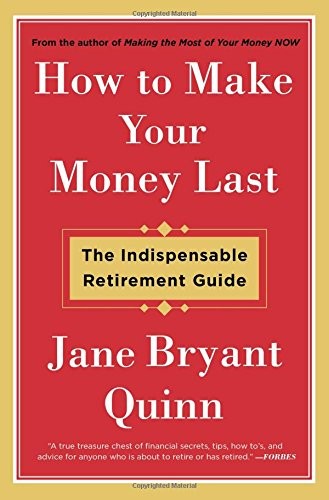
Jane Bryant Quinn
Best for: Turning accumulated wealth into sustainable retirement income
Experience level: Intermediate
Accumulating money for retirement is difficult.
Spending it can be surprisingly difficult too.
Once employment income stops, retirees face a new set of questions.
How much can I reasonably spend?
Which accounts should I draw from?
When should I claim Social Security?
How should my investments change?
What happens if I live much longer than expected?
How to Make Your Money Last focuses on the challenge of making accumulated resources support a retirement that could last for decades.
Why Aureus Recommends It
Retirement introduces a risk that doesn't receive enough attention during the accumulation years:
Sequence matters.
An investor who experiences a severe market decline while still contributing to retirement accounts is in a very different position from a retiree who experiences the same decline while withdrawing money from the portfolio.
At the same time, being excessively conservative can create another risk: failing to maintain enough growth to support a long retirement and keep pace with inflation.
Retirement planning therefore isn't simply about minimizing risk.
It's about managing multiple competing risks while creating a sustainable source of income.
Quinn provides a broad framework for thinking through those decisions.
You'll learn about:
- Retirement income
- Sustainable spending
- Social Security
- Withdrawal strategies
- Investment management during retirement
- Longevity risk
- Healthcare considerations
- Making savings last
Where Should You Start?
The best starting point depends heavily on where you are in your retirement journey.
If retirement is still some distance away and much of your wealth is accumulating inside 401(k)s and IRAs, The New Retirement Savings Time Bomb can help you think more carefully about the eventual tax consequences of those accounts.
If you're approaching retirement, start with The Five Years Before You Retire. Its focus on the transition itself makes it particularly useful when retirement has moved from a distant objective to an approaching reality.
If you're already retired—or primarily concerned with turning accumulated assets into sustainable income—choose How to Make Your Money Last.
Retirement isn't a finish line.
It's a transition from one financial system to another.
During your working years, your system is primarily designed to accumulate capital.
During retirement, that capital increasingly needs to support your life.
The better you prepare for that transition, the more flexibility you'll have when the time comes.
10. Building Wealth & Financial Independence
Building wealth is about more than earning a high income.
It's about what you consistently do with the resources you have.
Two households can earn similar incomes and end up in dramatically different financial positions. One may continually increase its lifestyle as income rises. The other may save, invest, acquire productive assets, and steadily increase its net worth.
Over decades, those differences can become enormous.
Financial independence takes the idea one step further. As your assets grow, they can eventually provide enough financial support that working becomes increasingly optional rather than necessary.
The books in this section explore three important questions:
How is wealth actually built?
How can a simple financial strategy create financial independence?
And once you've accumulated wealth, what is the money ultimately for?
The Millionaire Next Door
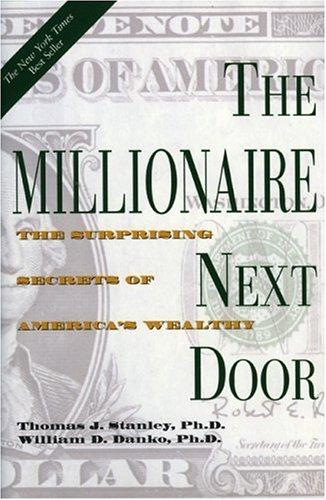
Thomas J. Stanley & William D. Danko
Best for: Understanding the habits behind long-term wealth accumulation
Experience level: Beginner to Intermediate
What does a millionaire look like?
Probably not what many people imagine.
In The Millionaire Next Door, Thomas Stanley and William Danko examine the behaviors and characteristics of affluent American households and find that substantial wealth often exists where you might least expect it.
Many wealthy households don't live extravagantly.
They accumulate wealth quietly.
They control spending, save a meaningful portion of their income, invest consistently, and avoid allowing appearances to dictate financial decisions.
One of the book's most important distinctions is between income and wealth.
A person can earn an enormous income while owning relatively little.
Another person can earn considerably less while steadily accumulating assets over decades.
Why Aureus Recommends It
This distinction sits at the heart of wealth building.
Income is what you earn.
Wealth is what you keep and build.
A larger income certainly makes wealth accumulation easier, but only if some portion of that income is consistently converted into assets.
Lifestyle inflation can prevent that from happening.
As income increases, houses get larger. Cars become more expensive. Vacations become more elaborate. Spending gradually rises until the higher income produces surprisingly little improvement in net worth.
The Millionaire Next Door provides a powerful counterexample.
Building wealth often looks much less exciting than displaying wealth.
You'll learn about:
- Income versus wealth
- Lifestyle inflation
- Savings behavior
- Living below your means
- Net worth
- Financial independence
- Consumption versus ownership
- Habits commonly associated with wealth accumulation
The Simple Path to Wealth
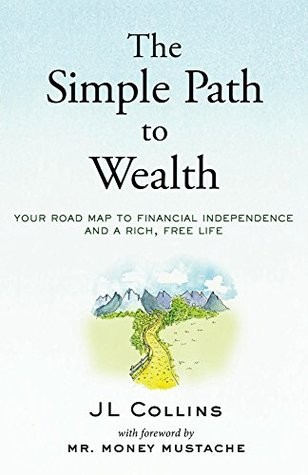
JL Collins
Best for: Building a simple long-term path toward financial independence
Experience level: Beginner to Intermediate
Financial independence can sound complicated.
How much should you save?
Where should you invest?
What should you do when markets fall?
How complicated does your portfolio need to be?
In The Simple Path to Wealth, JL Collins argues that the path can be much simpler than the financial industry often makes it appear.
The book grew from a series of letters Collins originally wrote to his daughter about money and investing. Its central themes include avoiding unnecessary debt, maintaining a high savings rate, investing simply, and gradually accumulating enough assets to create financial freedom.
Why Aureus Recommends It
One of the most useful ideas in the book is that wealth creates something more valuable than expensive possessions:
Options.
As your financial resources grow, your dependence on your next paycheck can gradually decline.
That doesn't necessarily mean retiring at 35.
It might mean changing careers.
Starting a business.
Taking time away from work.
Working fewer hours.
Moving somewhere new.
Or simply knowing that an unexpected job loss wouldn't immediately become a financial crisis.
That's why we view financial independence less as a specific retirement date and more as a continuum.
Every increase in savings, reduction in unnecessary debt, and addition to productive assets can increase your financial flexibility.
You'll learn about:
- Financial independence
- Savings rates
- Index investing
- Avoiding unnecessary debt
- Building investment assets
- Simple portfolio strategies
- Long-term compounding
- Using wealth to create freedom
Die With Zero
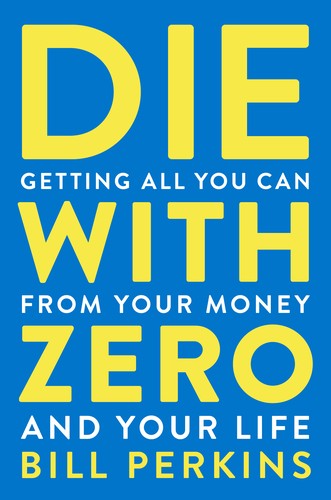
Bill Perkins
Best for: Thinking about how accumulated wealth should ultimately be used
Experience level: Intermediate
Most personal finance books focus on accumulation.
Earn more.
Spend less.
Save more.
Invest.
Build wealth.
Die With Zero asks a very different question:
What is all of that wealth actually for?
Bill Perkins argues that maximizing the amount of money you leave behind shouldn't automatically be the objective of your financial life.
Money has value because of what it allows you to do.
And the usefulness of money can change throughout your lifetime.
Some experiences are more meaningful when you're young. Others become more difficult as health, energy, family circumstances, and time change.
The book encourages readers to think about balancing future financial security with actually using their resources to create a fulfilling life.
Why Aureus Recommends It
We deliberately included Die With Zero because it provides an important counterweight to almost everything else in this section.
Saving matters.
Investing matters.
Building wealth matters.
But accumulating money isn't the ultimate objective of personal finance.
Money is a resource.
It can provide security, independence, experiences, generosity, time, and opportunities.
There is also a danger in taking wealth accumulation too far—continually postponing meaningful experiences because spending money feels inconsistent with the goal of maximizing net worth.
That doesn't mean abandoning prudent saving or risking your financial future.
It means recognizing that a successful financial system should support the life you're trying to build.
You'll learn about:
- Using money intentionally
- Balancing saving with living
- Lifetime consumption
- The changing value of experiences
- Giving money to others
- Thinking about longevity
- Financial independence
- Defining what "enough" means
Where Should You Start?
If you want to understand the habits and behaviors that often separate high earners from people who actually accumulate wealth, start with The Millionaire Next Door.
If your goal is financial independence and you want a straightforward framework for saving and investing toward it, choose The Simple Path to Wealth.
And if you've already become good at saving and accumulating wealth but rarely stop to consider what you're accumulating it for, read Die With Zero.
Taken together, these three books illustrate the entire wealth-building cycle:
Earn → Keep → Invest → Build → Use
The first challenge is learning how to accumulate wealth.
The second is allowing that wealth to create greater independence.
And the final challenge may be the easiest one to overlook:
Using your financial resources to support a life worth building them for.
11. Increasing Income & Career Capital
There is a limit to how much you can cut your expenses.
There is no equivalent limit on how much you can increase your income.
Reducing unnecessary spending can improve your finances quickly, but long-term wealth building often becomes much easier when you increase the amount of money available to save and invest in the first place.
That doesn't necessarily mean working more hours.
Income can grow by developing valuable skills, advancing your career, negotiating better compensation, changing industries, creating additional sources of income, or eventually building something of your own.
The books in this section focus on three important parts of that process: becoming more valuable, learning to negotiate, and deliberately designing your career.
So Good They Can't Ignore You
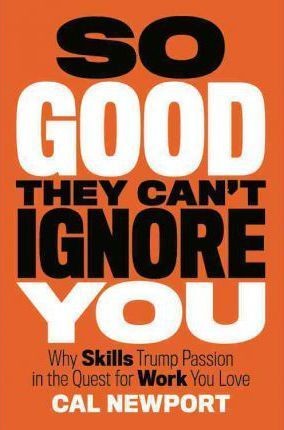
Cal Newport
Best for: Building valuable skills and increasing your career capital
Experience level: Beginner to Intermediate
"Follow your passion" is common career advice.
Cal Newport argues that it may have the relationship backward.
In So Good They Can't Ignore You, Newport makes the case that fulfilling careers often develop after people become exceptionally good at valuable skills.
As those skills become more valuable and difficult to replace, they create what Newport calls career capital.
That career capital can eventually be exchanged for things many people want from their careers:
- Higher compensation
- Greater autonomy
- More interesting work
- Flexibility
- Responsibility
- Better opportunities
Instead of beginning with the question:
"What is my passion?"
Newport encourages readers to ask:
"What valuable skills can I become exceptionally good at?"
Why Aureus Recommends It
Personal finance advice often focuses heavily on spending.
Cancel subscriptions.
Eat out less.
Buy a cheaper car.
Those things can certainly matter.
But expense reduction has a mathematical limit.
You can only reduce spending to zero.
Income has no comparable ceiling.
Developing valuable skills can increase your earning power not just this month, but potentially for decades.
A $10,000 increase in annual income sustained over a 30-year career represents $300,000 of additional gross income before considering future raises or what could happen if some of that additional income is invested.
That's why we consider human capital one of the most important assets many people possess—particularly early in their careers.
You'll learn about:
- Career capital
- Developing rare and valuable skills
- Deliberate practice
- Increasing professional value
- Building autonomy
- Creating better career opportunities
- Thinking differently about passion
- Investing in your own capabilities
Never Split the Difference
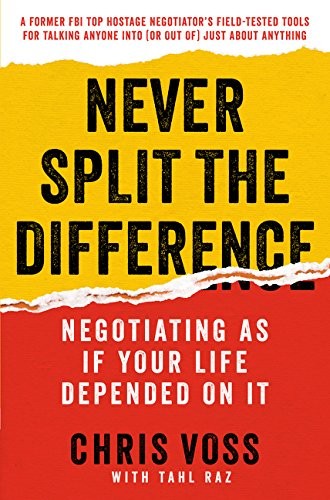
Chris Voss with Tahl Raz
Best for: Becoming a better negotiator
Experience level: Beginner to Intermediate
A single negotiation can sometimes have financial consequences that last for years.
Salary.
Bonuses.
Job offers.
Business contracts.
Major purchases.
Fees.
Even the terms surrounding a promotion.
Never Split the Difference was written by former FBI hostage negotiator Chris Voss and applies principles developed through high-stakes negotiation to more ordinary situations.
The book focuses heavily on communication, listening, understanding the other party's perspective, asking better questions, and negotiating without automatically compromising toward the middle.
Why Aureus Recommends It
Negotiation is an underrated financial skill.
Consider salary.
If you negotiate an additional $5,000 in compensation, the benefit isn't necessarily limited to one year.
Future raises may begin from the higher salary.
Retirement contributions tied to compensation may increase.
A future employer may evaluate compensation from a different starting point.
The cumulative effect can become substantial.
Negotiation can also affect what you pay.
A better deal on a car, house, business contract, or major service can sometimes save more money in a single conversation than months of cutting small expenses.
Not every situation is negotiable.
But learning how to negotiate effectively gives you another tool for improving the economics of the decisions that are.
You'll learn about:
- Negotiation
- Active listening
- Asking effective questions
- Understanding the other party
- Identifying constraints
- Handling objections
- Discussing compensation
- Reaching better agreements
Designing Your Life
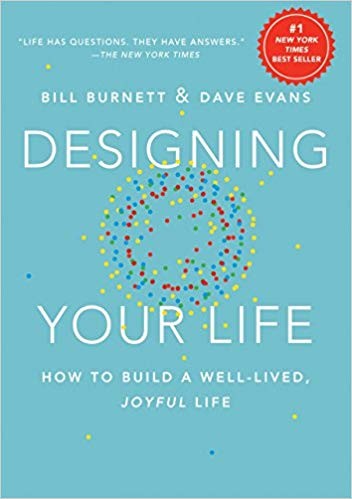
Bill Burnett & Dave Evans
Best for: Rethinking your career when you're unsure what should come next
Experience level: Beginner to Intermediate
Careers rarely unfold exactly according to plan.
Industries change.
Technology changes.
Priorities change.
Opportunities appear unexpectedly.
And sometimes a career that once made sense simply stops fitting the life you want.
In Designing Your Life, Bill Burnett and Dave Evans apply principles from design thinking to career and life decisions.
Instead of assuming there is one perfect career waiting to be discovered, they encourage readers to experiment with possibilities, test assumptions, and explore multiple potential paths.
Why Aureus Recommends It
Increasing income isn't always about asking your current employer for a raise.
Sometimes the bigger opportunity comes from changing roles, acquiring a new skill, moving into another industry, starting a side business, or taking an entirely different career path.
Those decisions can be intimidating because they involve uncertainty.
It's tempting to believe you need to know exactly where a new path will lead before taking the first step.
You usually don't.
Small experiments can provide information.
A course can test your interest in a new skill.
A side project can test a business idea.
A conversation with someone in another profession can reveal what the work is actually like.
A small amount of evidence can be far more useful than months spent trying to think your way toward the perfect decision.
You'll learn about:
- Career design
- Design thinking
- Exploring alternative career paths
- Testing ideas before making major changes
- Reframing problems
- Building prototypes and experiments
- Making decisions under uncertainty
- Creating a career that fits your broader life
Where Should You Start?
If you want to become more valuable in your current career, start with So Good They Can't Ignore You.
If you already have valuable skills but want to become better at converting that value into compensation and better terms, read Never Split the Difference.
And if you're questioning whether you're on the right career path at all, choose Designing Your Life.
Together, the three books illustrate a broader approach to increasing income:
Build Value → Communicate Value → Find Where That Value Is Most Valuable
Cutting expenses can create breathing room.
Increasing your earning power can change the scale of what's possible.
The most powerful financial system does both.
It manages the resources you have today while continually increasing your capacity to create resources tomorrow.
12. Entrepreneurship & Starting a Business
For some people, increasing income means advancing in a career.
For others, it means creating something of their own.
Starting a business offers the possibility of building an asset whose value isn't directly tied to the number of hours you work. But entrepreneurship also introduces uncertainty, financial risk, competition, and a completely different set of skills.
A good idea isn't enough.
A successful business has to create something customers value, reach those customers, generate revenue, manage costs, and eventually develop systems that allow the business to operate and grow.
The books in this section approach entrepreneurship from three different perspectives: building a business that doesn't depend entirely on its founder, testing ideas before investing heavily in them, and understanding the fundamental mechanics of how businesses work.
The E-Myth Revisited
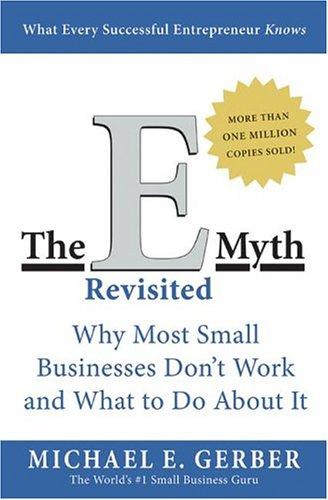
Michael E. Gerber
Best for: Learning how to build a business rather than simply creating a job for yourself
Experience level: Beginner to Intermediate
Being good at a particular skill doesn't necessarily mean you'll be good at running a business built around that skill.
A talented baker can open a bakery.
A skilled mechanic can open a repair shop.
A great programmer can start a software company.
But suddenly they're no longer responsible only for baking, repairing cars, or writing software.
They're responsible for sales, marketing, accounting, hiring, operations, customer service, strategy, and everything else required to keep the business running.
That distinction is at the center of The E-Myth Revisited.
Michael Gerber argues that many small-business owners don't really own businesses.
They own jobs.
And often, they're the hardest-working employee.
Why Aureus Recommends It
One of the greatest potential advantages of business ownership is leverage.
A business can combine people, processes, technology, and capital to create value beyond what one person could produce alone.
But that only happens when the company becomes more than the founder.
Gerber emphasizes building repeatable systems so that important activities don't depend entirely on one person's memory, effort, or presence.
That's an idea that extends far beyond small businesses.
A company becomes more scalable when knowledge becomes processes, processes become systems, and those systems can operate consistently.
You'll learn about:
- Working on the business versus in the business
- Building repeatable systems
- Documenting processes
- Delegation
- Creating consistent operations
- Reducing founder dependence
- Scaling a small business
- Thinking like an owner
The Lean Startup
Eric Ries
Best for: Testing a business idea before committing significant resources
Experience level: Beginner to Intermediate
Entrepreneurs frequently begin with an idea they believe customers will want.
Then they spend months—or years—building it.
The problem is that belief isn't evidence.
The Lean Startup presents a different approach.
Instead of attempting to perfectly design a product before exposing it to customers, Eric Ries advocates building something that allows entrepreneurs to test their most important assumptions as quickly as possible.
The central cycle is:
Build → Measure → Learn
Create something.
Observe how real customers respond.
Learn from the results.
Then decide what to change.
Why Aureus Recommends It
One of the biggest risks in starting a business is spending significant time and money solving a problem customers don't care enough about.
Entrepreneurs naturally become attached to their ideas.
The market isn't obligated to share that enthusiasm.
That's why testing assumptions early can be so valuable.
Can you find customers?
Do they actually have the problem you think they have?
Will they use your solution?
Will they pay for it?
What features do they actually value?
Learning the answers while the business is still small can be far less expensive than discovering them after substantial capital has already been committed.
You'll learn about:
- Minimum viable products
- The Build-Measure-Learn cycle
- Testing business assumptions
- Customer feedback
- Validated learning
- Experimentation
- Measuring progress
- Knowing when to adapt
The Personal MBA
Josh Kaufman
Best for: Understanding the fundamental components of how a business works
Experience level: Beginner to Intermediate
Running a business requires knowledge across many disciplines.
You need to understand customers.
You need to create something valuable.
You need to market it.
You need to sell it.
You need to deliver it.
And the economics ultimately need to work.
The Personal MBA provides a broad introduction to many of these fundamental business concepts without requiring a formal business-school education.
Rather than focusing on one particular type of company or entrepreneurial strategy, Josh Kaufman examines the underlying systems that businesses use to create and capture value.
Why Aureus Recommends It
Entrepreneurs often begin with expertise in one area.
A programmer understands software.
A financial professional understands markets.
A designer understands design.
An engineer understands engineering.
But building a company requires connecting that expertise to an entire business system.
A great product that nobody discovers won't sell.
A product that sells but can't be delivered profitably isn't sustainable.
A profitable company that runs out of cash can still fail.
Understanding how these pieces interact makes it easier to see the business as a whole rather than concentrating exclusively on the part you already know best.
You'll learn about:
- Value creation
- Marketing
- Sales
- Value delivery
- Business finance
- Operations
- Systems and processes
- Decision-making
- How different parts of a business interact
Where Should You Start?
If you're thinking about starting a business and want a broad understanding of how businesses actually work, start with The Personal MBA.
If you already have an idea and need to determine whether customers actually want what you're planning to build, read The Lean Startup.
And if you've already started a business but find that everything depends on you, The E-Myth Revisited may be the most valuable of the three.
Together, they address three very different entrepreneurial problems:
Understand the Business → Validate the Idea → Build the System
Entrepreneurship can create extraordinary opportunities for income and wealth.
But starting a business isn't simply another investment.
It means creating something people are willing to pay for—and building an organization capable of delivering that value consistently.
When that happens, you've created more than another source of income.
You've created an asset.
13. Advanced Investing & Capital Allocation
There is a point where learning more about investing means moving beyond the mechanics of building a diversified portfolio.
The questions become more difficult.
What is a business actually worth?
How should investors think about risk?
Why do attractive investments sometimes become poor investments at the wrong price?
How should capital be allocated among competing opportunities?
And how should investors think about changing market conditions without falling into the trap of trying to predict the future?
The books in this section aren't where we'd recommend most investors begin.
They're for readers who already understand the fundamentals and want to go deeper into valuation, risk, market cycles, investment judgment, and capital allocation.
The Intelligent Investor
Benjamin Graham
Best for: Learning the foundational principles of value investing
Experience level: Advanced
Few investment books have had as much influence as Benjamin Graham's The Intelligent Investor.
Graham's central idea is deceptively simple:
An investment and its market price are not necessarily the same thing.
Stocks represent ownership interests in businesses, but the prices investors are willing to pay for those interests can fluctuate dramatically.
Rather than allowing those fluctuations to dictate investment decisions, Graham encourages investors to think independently about value.
The book introduces enduring concepts such as margin of safety and Graham's famous metaphor of Mr. Market, which illustrates how investors can view market volatility as something to respond to rationally rather than emotionally.
Why Aureus Recommends It
The Intelligent Investor teaches something more important than a formula for finding inexpensive stocks.
It teaches an investment philosophy.
Price matters.
Risk matters.
Temperament matters.
And markets should generally be viewed as a mechanism that offers investors prices—not as an authority telling them what assets are worth.
Some of Graham's specific methods reflect the markets of his era, but the principles underlying them remain enormously influential.
This isn't the book we'd recommend to someone making their first investment.
It's a book for someone who wants to begin thinking like an investor rather than a market participant.
You'll learn about:
- Value investing
- Intrinsic value
- Margin of safety
- Price versus value
- Mr. Market
- Investor temperament
- Defensive versus enterprising investing
- Thinking independently about investments
The Most Important Thing
Howard Marks
Best for: Developing better judgment about risk and investment decisions
Experience level: Intermediate to Advanced
Investing is full of simple statements that become much more complicated when examined closely.
Higher returns require higher risk.
Buy low and sell high.
Markets are efficient.
Good companies make good investments.
Howard Marks spends much of The Most Important Thing examining the nuances behind ideas like these.
One of the book's central concepts is second-level thinking.
First-level thinking might say:
This is a great company, so I should buy the stock.
Second-level thinking asks:
It's a great company—but does everyone already know that, and what assumptions are already reflected in the price?
That distinction captures much of what separates basic investment analysis from more sophisticated investment judgment.
Why Aureus Recommends It
Marks places risk at the center of investing.
Not simply volatility.
Not simply whether a stock price moves up and down.
But the possibility of permanent loss and unfavorable outcomes.
He also emphasizes that the quality of an asset and the quality of an investment aren't necessarily the same thing.
A wonderful business can be a terrible investment at an unreasonable price.
A troubled asset can potentially become an attractive investment at a sufficiently discounted price.
Understanding that relationship between fundamentals, expectations, price, and risk is essential to advanced investing.
You'll learn about:
- Second-level thinking
- Investment risk
- Price versus value
- Market efficiency
- Investor psychology
- Contrarian thinking
- Defensive investing
- Probabilistic decision-making
The Essays of Warren Buffett
Warren E. Buffett, selected and arranged by Lawrence A. Cunningham
Best for: Understanding businesses, shareholders, and capital allocation
Experience level: Intermediate to Advanced
Successful investing eventually leads to a broader question:
What should a business do with the capital it generates?
Management can reinvest in existing operations.
Acquire another business.
Repurchase shares.
Pay dividends.
Reduce debt.
Or simply retain cash.
Those decisions can have enormous consequences for long-term shareholder returns.
The Essays of Warren Buffett organizes Buffett's writings around topics including corporate governance, investing, acquisitions, accounting, valuation, finance, and the relationship between businesses and their owners.
Why Aureus Recommends It
One of the most important transitions an investor can make is to stop thinking about stocks primarily as ticker symbols and start thinking about them as ownership interests in businesses.
From that perspective, capital allocation becomes critically important.
A great business can destroy shareholder value if management repeatedly deploys capital poorly.
A mature company with limited opportunities for reinvestment may create value by returning capital to shareholders.
Another company may be able to reinvest internally at attractive rates for decades.
The correct decision depends on the economics of the business and the opportunities available.
Buffett's writings provide an exceptional framework for thinking about those decisions from the perspective of both an investor and a business owner.
You'll learn about:
- Capital allocation
- Business economics
- Corporate governance
- Share repurchases
- Dividends
- Acquisitions
- Accounting
- Valuation
- Thinking like a business owner
Mastering the Market Cycle
Howard Marks
Best for: Understanding how markets, psychology, and risk change over time
Experience level: Intermediate to Advanced
Markets don't move in straight lines.
Optimism builds.
Credit becomes easier to obtain.
Investors become increasingly willing to take risk.
Asset prices rise.
Eventually conditions change.
Fear replaces optimism, credit becomes more difficult to obtain, investors become more risk-averse, and assets that once seemed impossible to buy cheaply may suddenly become available at dramatically lower prices.
Then, eventually, the process begins again.
In Mastering the Market Cycle, Howard Marks explores these recurring patterns and how investors can think about where markets may stand within them.
The objective isn't to perfectly predict the next market top or bottom.
It's to understand how the investment environment changes—and how the balance between risk and opportunity can change with it.
Why Aureus Recommends It
There's an important distinction between market timing and market awareness.
Market timing suggests that investors can reliably predict exactly when markets will rise or fall.
That's an extraordinarily difficult task.
Market awareness asks a different question:
What does the current environment suggest about the amount of risk investors are accepting and the returns they're demanding for taking it?
When optimism is extreme, credit is abundant, valuations are elevated, and investors appear unconcerned about risk, future opportunities may be less attractive.
When fear dominates markets and investors are desperate to reduce risk, attractive opportunities can sometimes become more plentiful.
Marks doesn't provide a formula for identifying exactly where we are in a cycle.
Instead, he teaches investors to observe conditions, think probabilistically, and adjust their level of aggressiveness or defensiveness accordingly.
You'll learn about:
- Market cycles
- Credit cycles
- Investor psychology
- Risk tolerance
- Market sentiment
- Valuation
- Risk and opportunity
- Aggressive versus defensive positioning
- Thinking probabilistically about markets
Where Should You Start?
If you're moving from passive investing toward understanding individual securities and value investing, start with The Intelligent Investor.
If you already understand valuation and want to develop better judgment about risk, price, and investor psychology, read The Most Important Thing.
If you're interested in understanding businesses from the perspective of an owner and capital allocator, move on to The Essays of Warren Buffett.
And if you want to better understand how changing market environments affect risk and opportunity, read Mastering the Market Cycle.
Together, these four books represent a progression:
Value → Risk → Capital Allocation → Cycles
But there's an important reason we've placed this section at the end of the Aureus Financial Reading List.
Advanced investing should generally come after the foundation.
Before trying to value individual businesses or interpret market cycles, build your emergency savings. Control expensive debt. Understand cash flow. Learn the fundamentals of diversification and portfolio construction.
Sophisticated investment knowledge can't compensate for a weak financial foundation.
Build the foundation first.
Then, if you want to go deeper, these books are an excellent place to continue.
Keep Learning. Keep Building.
You don't need to read every book on this list.
And you certainly don't need to read them all before taking action.
Choose the area of your financial life that matters most right now. Pick one book. Learn from it. Most importantly, put what you learn into practice.
Then move on to the next problem.
Over time, those small improvements begin to connect:
Better cash flow creates savings.
Savings create resilience.
Eliminating expensive debt frees up cash flow.
Investing puts accumulated capital to work.
Increasing income expands what you can save and invest.
And consistently making sound decisions allows those advantages to compound over time.
That's ultimately what financial education should accomplish.
Not knowing everything about money.
Knowing enough to make better decisions—and continuing to improve those decisions throughout your life.